
Crawl space encapsulation in Columbia costs $4,000–$14,000 for the complete sealed system. Midlands summers above 95°F push saturated air into vented crawls, where it condenses and holds the space over 70% RH all season — the line where wood feeds rot and termites. Healthy crawls run 45–55%.
The upstairs evidence, how the condensation engine works, and the sealed fix priced by stage.
What the house upstairs already knows
- The must that arrives with June — crawl air rising through the floor on schedule
- Floors going soft near baths and exterior walls — condensation's favorite framing
- Hardwoods cupping over the dampest bays
- An AC running hard and losing anyway — it's dehumidifying the crawl through your floor
- Allergies that ease at the beach — the crawl is the air supply
- Insulation sagging or fallen below — saturated batts giving up their grip
Two or more usually means the crawl. The inspection is free and photographed — evidence first, prices after.
The condensation engine, explained
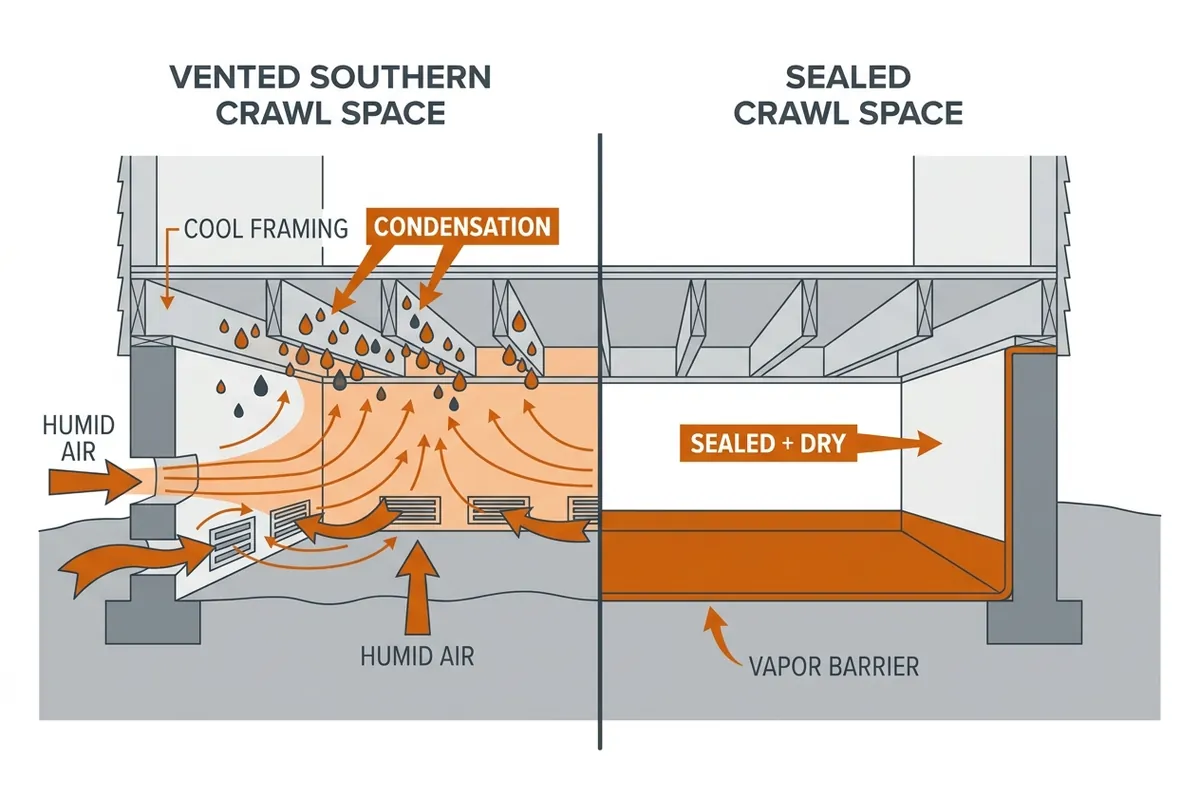
Columbia's summer air arrives carrying about as much water as air can hold. A vented crawl invites it under the house — where the AC has cooled floors, ducts, and framing well below the outdoor dew point. The physics finish the job: moisture condenses on every cooled surface, exactly like the glass of tea on a porch table, hour after hour, all season. No storm required. Meanwhile the Midlands ground plays its part — clay holding rain against footings and opening gaps as it cycles, sandier lots breathing vapor upward — and the crawl parks above the 70% line from May to October.
Venting was the old theory: let air flow and the crawl dries. In this climate the vents are the water supply. The fix inverts the design — close the vents, seal ground and walls with a Class I barrier, dry mechanically — the exact unvented design South Carolina's adoption of IRC R408.3 recognizes.
The sealed fix, by stage
| Stage | Includes | Range |
|---|---|---|
| Vapor barrier | Class I ground seal, wrapped piers, taped seams | $1,500–$4,000 |
| Water management | Drainage, sump, discharge for the clay side's storm water | $2,000–$5,000 |
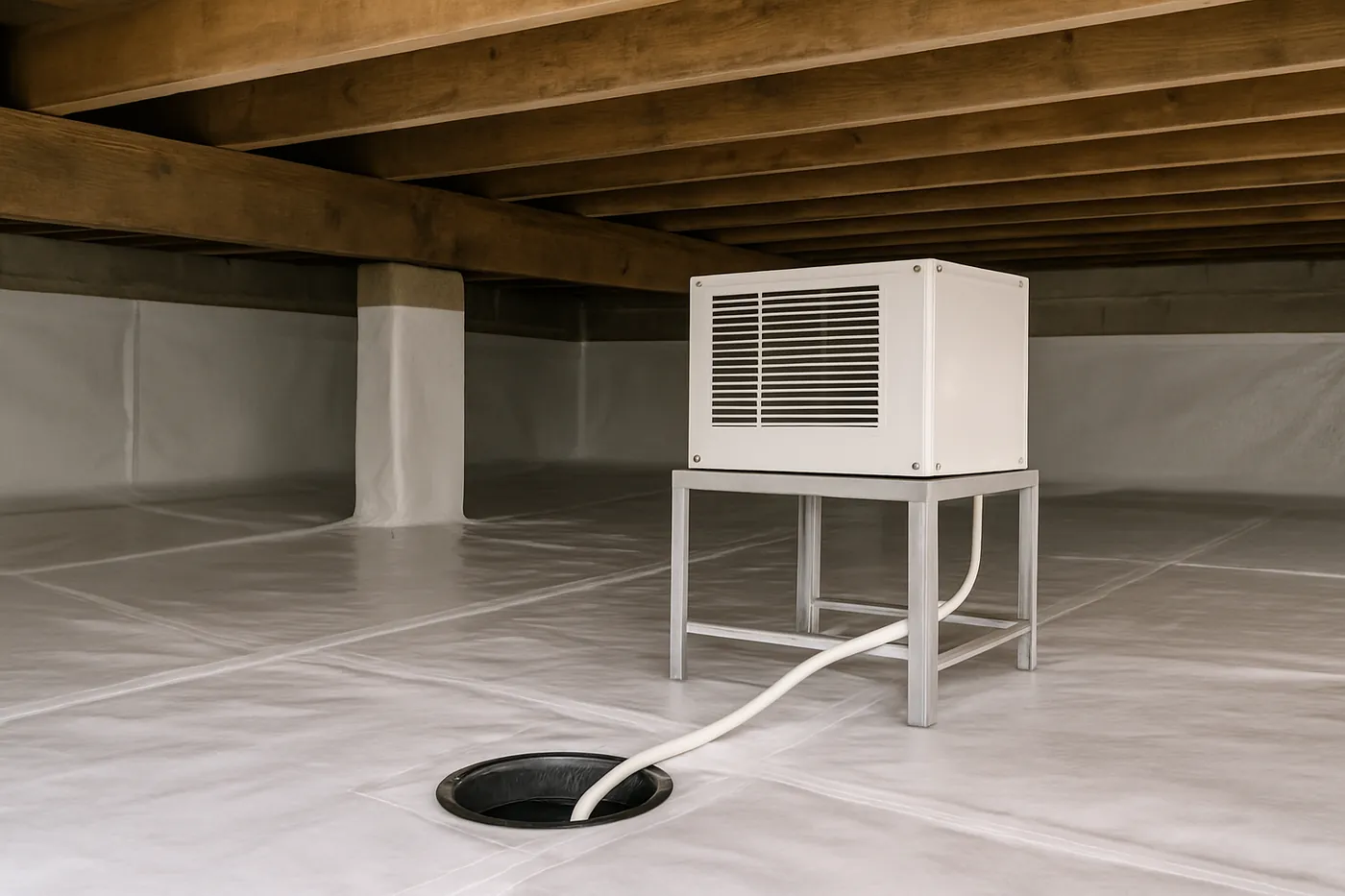
| Full encapsulation | Seal + vents closed + sized mechanical drying | $4,000–$14,000 |
| Structural repair | Framing the humid years softened | Per written scope |
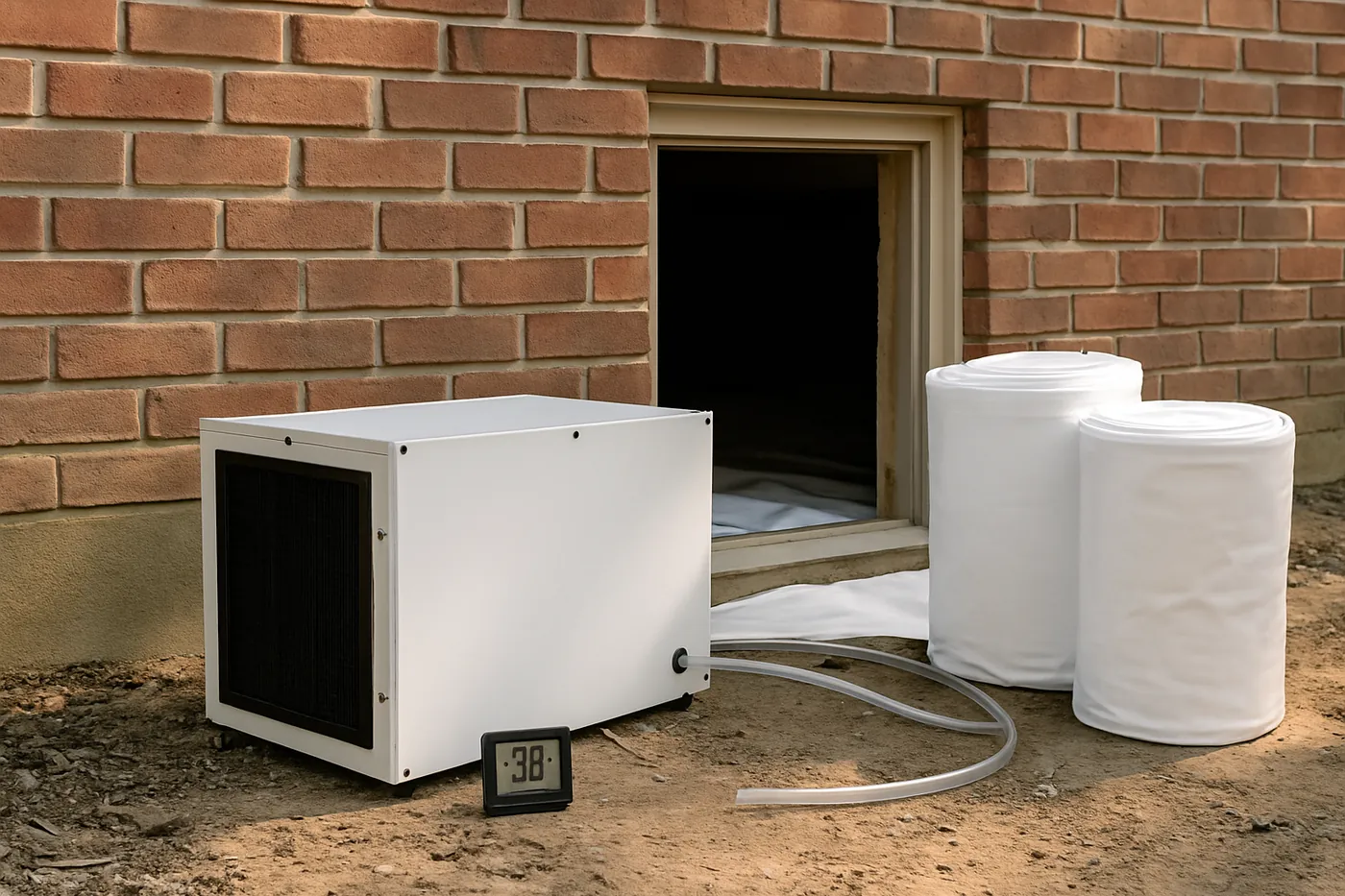
Ongoing dryness is a number you can watch — commissioning readings document the drop, and moisture control holds 45–55% through the hottest August the Midlands can serve.
What changes when the engine stops
The June must doesn't arrive. The AC stops fighting a wet crawl through the floor and summer bills ease. Softening framing stops absorbing and repaired spans stay repaired. And the termite conversation changes for good — sealed-dry crawls are the opposite of what South Carolina's termite pressure hunts. It's one system, it runs on physics, and it comes with its numbers attached.
One job gets its own deep page: how sagging floors over a Midlands crawl space get measured, repaired, and kept dry.
Crawl space questions Columbia homeowners ask
How much does crawl space encapsulation cost in Columbia, SC?
Full encapsulation runs $4,000 to $14,000 in the Midlands, positioned by square footage, water management, and what the humid years did to framing. Vapor barriers alone run $1,500-$4,000. Every quote follows a free photographed inspection with humidity readings. Our Crawl space encapsulation cost breakdown for Columbia shows what drives each figure, line by line.
Why are Columbia crawl spaces so wet when it barely rains for weeks?
The condensation engine: Columbia summers regularly top 95 degrees with loaded humidity, and vented crawls invite that air under the house — where it hits surfaces the AC cooled and condenses like a glass of sweet tea. No rain required; the water arrives as air. Vented Midlands crawls sit above 70% RH all season this way.
What's the healthy humidity number for a crawl space?
45-55% relative humidity. Above 70% — where vented Columbia crawls live all summer — wood absorbs enough moisture to feed rot and attract termites. The sealed-and-dried design exists to hold the healthy number through a Midlands August.
Does Columbia's clay make it worse?
The Midlands' clay expands wet and shrinks dry, opening gaps between foundation and framing that pull even more humid air in — and it holds storm water against footings on the clay side of town. Sandhills-transition lots drain faster below but breathe vapor generously. Both feed the engine; the inspection reads which mix your lot runs.
Is a sealed crawl space allowed under South Carolina code?
Yes — IRC R408.3's unvented crawl provisions, as adopted in South Carolina, explicitly permit sealed crawls with a Class I vapor barrier and mechanical drying. Sealed-and-dried is the code-recognized answer to this climate, not a loophole.
We flooded in 2015. Does that history matter to my crawl?
The October 2015 flood rewrote drainage across parts of the Midlands — Gills Creek most famously — and crawls in affected areas sometimes carry legacy moisture damage plus changed water paths. We read flood-era history seriously at inspection: what happened then explains a lot of what framing shows now.
How long does the work take?
Vapor barriers a day; drainage one to two; full encapsulation two to four days; structural repairs extend per scope. The written quote states your timeline, and the house stays livable throughout.
Which areas do you serve?
Both sides of the river and around Lake Murray: Columbia, Lexington, Irmo, West Columbia, Cayce, Forest Acres, Blythewood, Chapin, Elgin, and Gaston — each with its own page and its own ground.
Crawl space work across the metro
Blythewood · Cayce · Chapin · Elgin · Forest Acres · Gaston · Irmo · Lexington · West Columbia · all service areas
Get a free Columbia crawl space inspection
Tell us what you're noticing — smells, humidity, floor bounce, a wet crawl — and we'll schedule an inspection with photos of what we find. We reply the same business day.