Encapsulating a crawl space in Lexington costs about $4,000–$14,000 for the complete sealed system, and barrier or drainage stages cost less. Lexington requests go to one independent local specialist whose inspection takes humidity readings before any quote.
Growth-town crawls
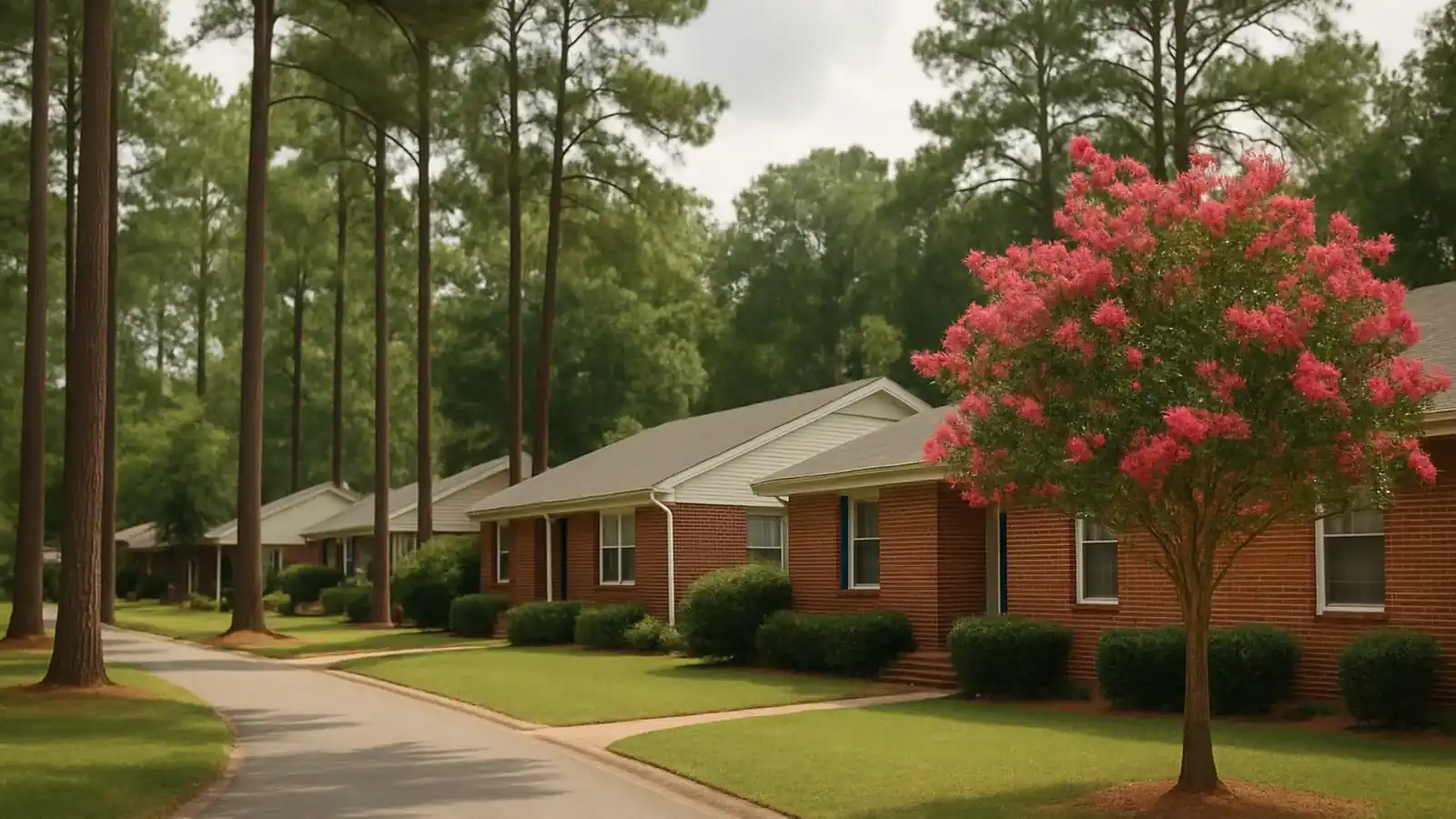
Lexington's boom stacked subdivisions from the town center toward the lake: 1990s onward, vented crawls standard, lots straddling the clay-to-sandhills handoff. Lake-side streets breathe moister air; clay-side lots hold their storms; and the newer stock runs the condensation engine with less accumulated damage but identical physics. Catch-it-early is the operative Lexington play.
Early-stage economics
Young crawls seal at their cheapest configuration: sound framing skips repair lines, lighter water stages on the sandy lots, and the full engine-off installs clean. Clay-side streets add drainage where the inspection's water trace demands. The same inspection applies, lake to town; ask for the readings.
Asked in Lexington
Does Lake Murray make nearby crawls worse?
Lakeside air carries a touch more moisture more consistently, which nudges dryer sizing up a notch: meaningful at the margin, not a different problem. The engine physics are identical; the commissioning readings just earn their margin honestly near the water.
Our 2015-built home already smells musty. Too young for that?
Right on schedule, unfortunately: vented crawls import the same saturated air at year three as year thirty. Young framing means the fix is pure system cost with no repair lines; sealing now is the cheapest this crawl will ever be to fix.
What does encapsulation cost for a Lexington home?
The Midlands range ($4,000–$14,000) with Lexington's mix pushing both directions: newer lake-corridor homes seal efficiently toward the lower half, while larger footprints and drainage-stage findings climb. The inspection with readings sets your number; the cost guide walks every factor that moves it.
Does Lexington's growth boom affect existing crawls?
Through water, yes: every new roofline and road upslope re-routes storm flow, and established lots downhill inherit drainage patterns they weren't graded for. A crawl that stayed dry for fifteen years and turned damp recently often has a construction map, not a plumbing leak, as its explanation: the inspection walks the modern water path.
Lexington's housing, decade by decade
About 10,350 housing units stand in the Town of Lexington in the 2020-2024 Census estimates. The 2000s are the largest decade at about 33 percent, the 1990s add 23 percent and the 2010s 21 percent; eight homes in ten date from 1990 on, and the median was built in 2002. Fewer than one in ten predates 1980. That is the growth-town profile described above, with most crawls between ten and thirty-five years old.
Twelve Mile Creek and town inspections
USGS has records on Twelve Mile Creek at Lexington, and the town's stormwater program is part of the Lexington Countywide Stormwater Consortium. Lexington's Building and Construction Inspections office inspects residential projects for compliance with the International Building Codes and issues occupancy certificates. Ask the specialist which town permit a dehumidifier circuit or drain line needs.
Lexington and the rest of the Midlands
Every community covered is on the service areas page, and the Columbia crawl space overview explains the region. Ask whether the inspection carries a fee, and keep the readings.
Get a Columbia crawl space inspection
Tell us what you're noticing (smells, humidity, floor bounce, a wet crawl) and we'll pass your request along for an inspection. You get a call back from a local specialist who serves Columbia.