
Crawl space waterproofing in Columbia costs $2,000–$5,000 for interior drainage with a sump — the stage for clay-side crawls where Midlands storm water seeps and stands. Surface fixes run hundreds and get checked first; sandhills lots often skip this stage entirely.
How Columbia's split ground handles storms, the system stages, and the flood-history read we take seriously.
A city on two grounds
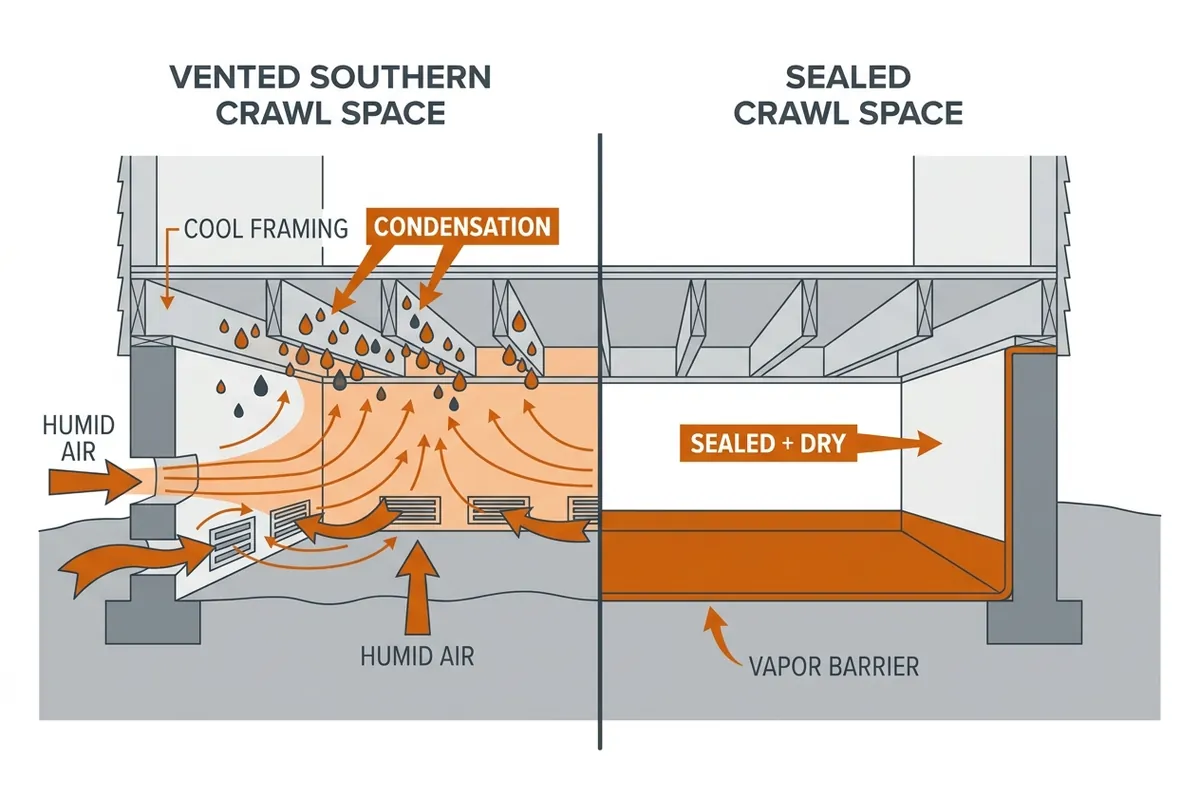
Columbia straddles a geological handoff: Piedmont-edge clay on one side of the metro's soils, sandhills transition on the other, river corridors threading between. Storm water behaves accordingly — clay lots hold rain against foundations and seep it through block joints for days; sandy lots pass liquid quickly and mostly export vapor instead. That split is why our water stage is diagnosed, not defaulted: the same storm writes two different crawls a mile apart, and only one of them needs a drain.
The stages, cheapest first
- Surface honesty — downspouts extended past the clay's grip, grade rebuilt to shed, storm paths intercepted. Hundreds of dollars; occasionally the entire cure.
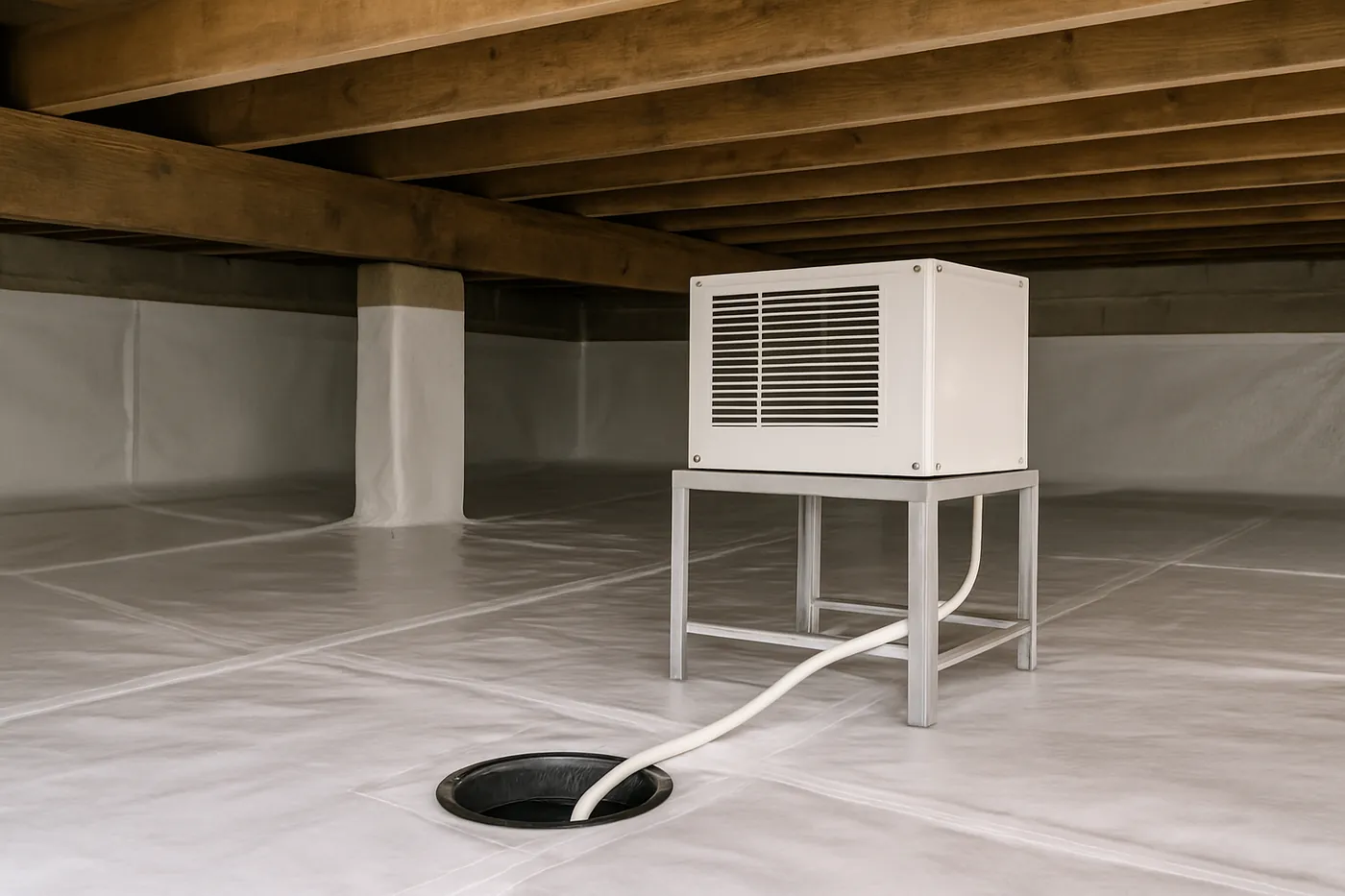
- Interior collection — perimeter drain at the footing catching wall seepage and under-floor water, graded to a sealed sump.
- The pump and route — sized pump, check valve, and discharge walked to where flat Midlands ground can't recycle it.
| Scope | Cost | Orders it |
|---|---|---|
| Surface corrections | $300–$1,200 | Roof-water feeding, fixable grade |
| Interior drainage + sump | $2,000–$5,000 | Standing or seeping water, clay-side lots |
| Vapor-only crawls | $0 here | Skip to the barrier — honestly |
Flood history is engineering data
The Midlands remembers October 2015, and so do its drainages — watersheds like Gills Creek had their water paths rewritten, and crawls in affected areas sometimes carry both legacy damage and changed seepage behavior. Where your lot has that history, the inspection treats it as input: what the flood did then is the best predictor of what wet seasons do now, and the drainage design respects it. It's one more reason the water stage here is walked and read, never assumed.
Storm water on expand-contract clay
Columbia's waterproofing problem arrives mostly on storm schedules: Midlands downpours land on clay that sheds when baked hard and holds when saturated — both modes delivering water to the foundation line, where the clay's seasonal gaps give it a path under the house. The design ladder starts cheap and decisive: downspout extensions, regraded swales, surface routing that intercepts roof water before it reaches the crawl's catchment. Where the lot's geometry sends water anyway, the engineered interior takes over: perimeter collection at the footing, sealed sump basin, and discharge with the fall to keep pumping through a stacked July storm.
Every system here ends sealed — an open pit in a humid-climate crawl is a humidity source wearing a safety costume — and every discharge line gets walked to daylight. The inspection maps entries first and prices the smallest system that ends the water; the expensive version has to earn its lines with readings.
Waterproofing questions, straight answers
What does crawl space waterproofing cost in Columbia?
Interior drainage with a sump runs $2,000-$5,000 for most Midlands crawls. Surface corrections — gutters, extensions, grading — run hundreds and get checked first because they occasionally solve everything.
Which Columbia lots actually need the drainage stage?
The clay side's storm-water crawls: lots where Midlands clay holds rain against footings and seeps it through block for days. Sandhills-transition lots often skip liquid management entirely and fight only vapor. The inspection traces your water before anything is proposed — the stages aren't sold as a bundle.
Did the 2015 flood change what crawls around here need?
In affected drainages, genuinely — the October 2015 event rewrote water paths in places like the Gills Creek watershed, and some crawls still carry its legacy in framing and in changed seepage patterns. Where your lot has flood history, we read it as engineering input: what happened then predicts wet-season behavior now.
Where does sump discharge go on a flat Midlands lot?
Far enough to not boomerang: extended runs to genuine fall where grade offers it, dry wells where it doesn't, never a property-line dump for the clay to hand back. The route gets walked at inspection — discharge design is half the system's lifespan.
Do I need waterproofing if the crawl is only damp, never wet?
Probably not this stage — damp-without-liquid is usually the vapor-and-air story, answered by the barrier and drying. Standing water, even seasonal, is what orders drainage. Paying for stages your readings didn't order is exactly what the itemized inspection exists to prevent.
Get a free Columbia crawl space inspection
Tell us what you're noticing — smells, humidity, floor bounce, a wet crawl — and we'll schedule an inspection with photos of what we find. We reply the same business day.