
Crawl space structural repair in Columbia runs $1,500–$8,000 for most scopes — steel jacks, sistered joists, and sill work for framing the condensation engine softened. Paired with drying, the repair is permanent; unpaired, it's a rerun with new lumber.
How Midlands framing softens, the toolkit, and the pairing rule.
How a Columbia floor loses its nerve
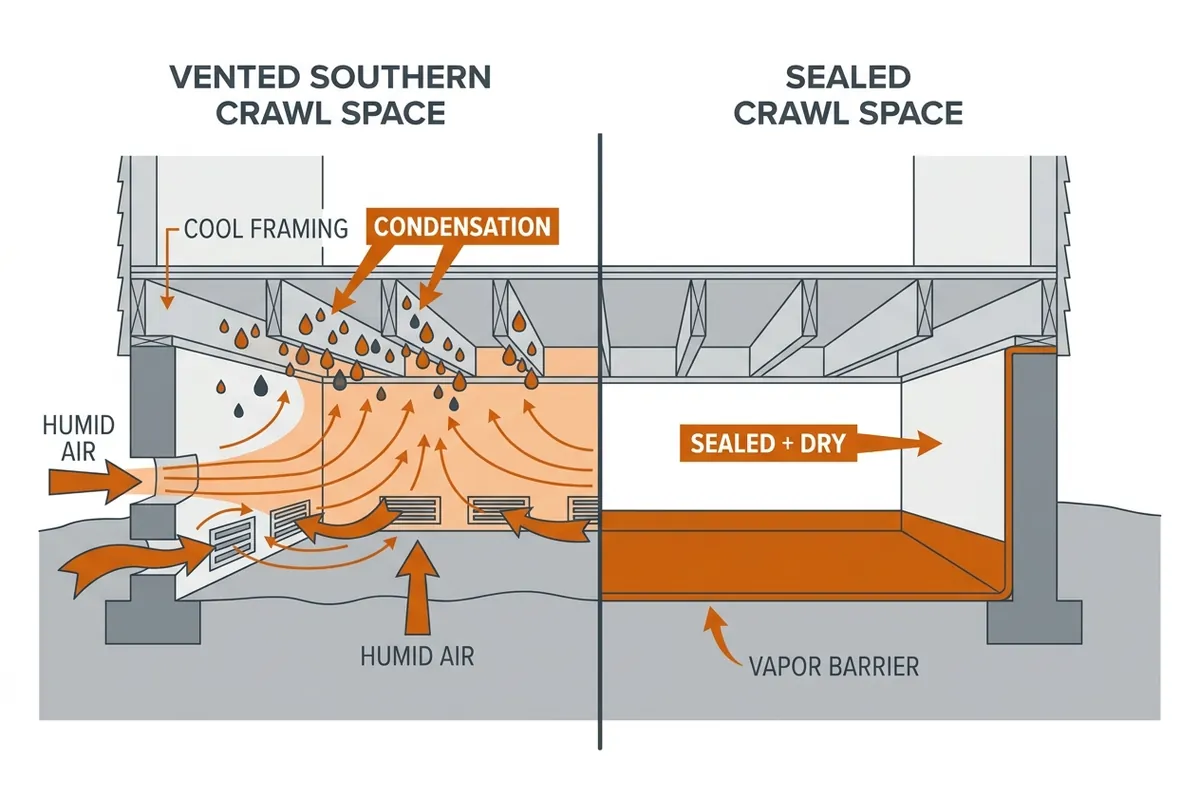
Every vented summer, condensation wets framing surfaces from May to October; every winter, the wood dries partway back. Years of that cycle raise moisture content past the threshold decay fungi need, and subtraction begins — joist edges going punky near the vents that fed them, sill plates softening along shaded walls, beams losing section over the dampest bays. Upstairs it reads as bounce, then slope, then doors negotiating with frames. All of it probes readable in one photographed pass, and all of it repairs.
The toolkit
| Fix | Does | Typical use |
|---|---|---|
| Adjustable steel jacks | Restore and hold elevation on real footings | Sagging beams, settled pier lines |
| Sistered joists | New lumber bolted beside softened spans | Bouncy runs, localized decay |
| Beam replacement | Swap what decay finished | Beam-bottom rot, undersized originals |
| Sill repair | Rebuild the wall-top wood | Perimeter softening at vented walls |
The pairing rule, in writing
We don't sell structural repair into a crawl that will stay above the line — that's selling you the same job twice on a schedule. Every scope pairs the wood work with its drying answer: ground seal at minimum, full seal-and-dry where the readings demand it, drainage when liquid water started the story. One campaign, one opening of the crawl, one permanent result — and the commissioning readings prove the cause retired with the symptom.
What long summers leave in Midlands framing
Columbia's crawl framing has spent its service life above the moisture line every summer the crawl stayed vented — and repair scopes read the accumulation: sills that softened where clay-side moisture cycled hardest, girder bearings crushed slowly under decades of damp load, floor systems that answer footsteps with bounce where joists lost section to old decay. The playbook favors keeping original wood where it still carries: sister beside, reset bearings on proper footings, replace only what the probe condemns — every member photographed and named, because "some framing repair" is not a scope.
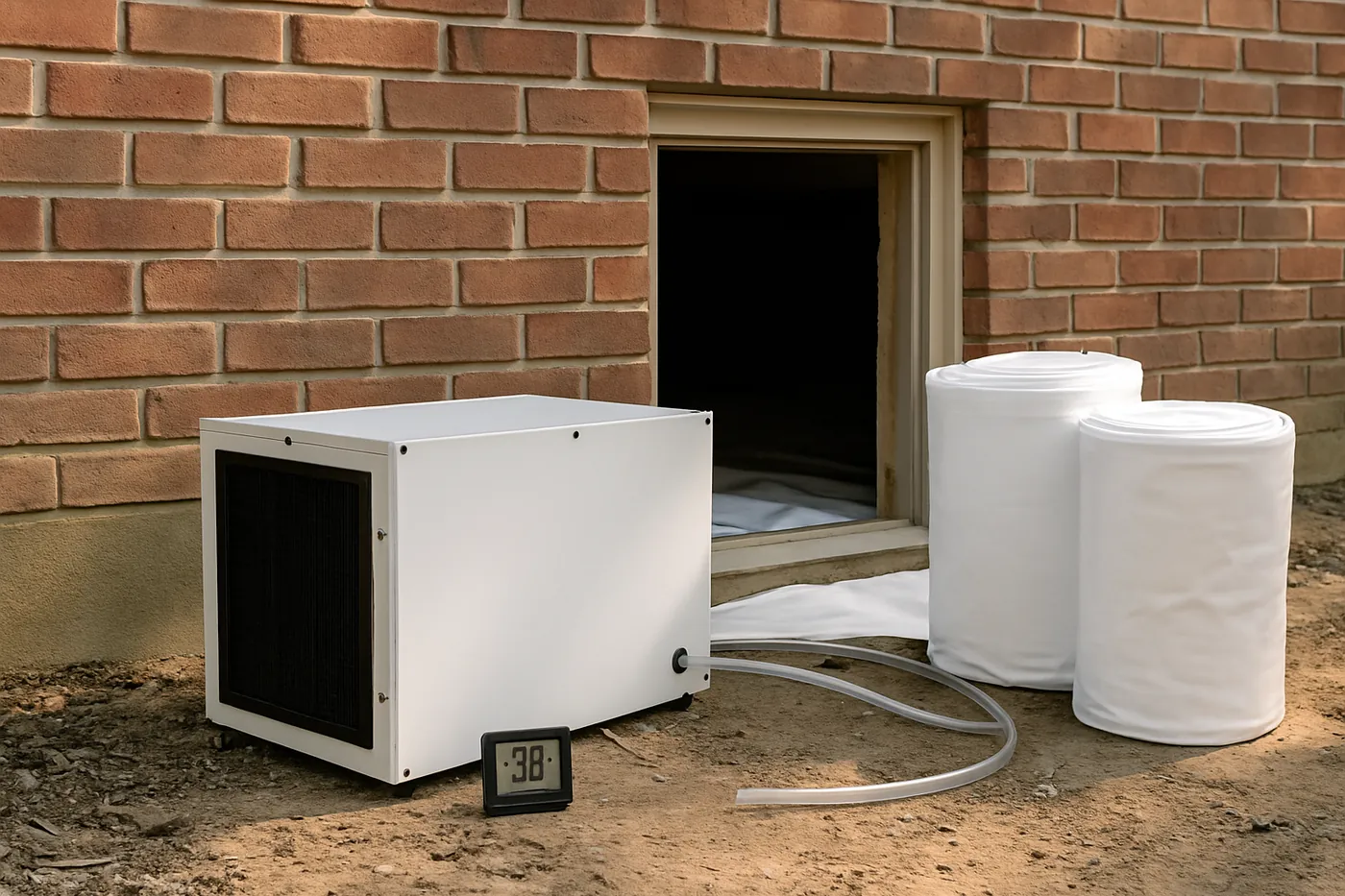
The rule that keeps the repair permanent is the same one that governs everything under a Columbia house: fix the moisture with the wood. A sistered joist returned to a 70%-humidity crawl is an experiment repeating itself; the repair line and its moisture-correction line travel together on our scopes, priced separately, sequenced correctly.
Repair questions, straight answers
What does crawl space structural repair cost in Columbia?
Most scopes run $1,500-$8,000: adjustable steel jacks on proper footings at the entry, sistered joists through the middle, beam and sill replacement at the top. Priced per repair from the photographed inspection — never per square foot of worry.
How did my floors get soft in the first place?
The condensation years: framing held above the 70% line absorbs until decay fungi find their threshold and begin subtracting wood. Joist edges near vents, sills on the shady side, and spans over the dampest ground lead the decline. A probe and a photographed pass read the whole story in an hour.
Do repairs last if the crawl stays humid?
No — and we won't pretend otherwise. New lumber in a 75% crawl starts absorbing on install day. Every structural scope here pairs with its drying answer, from barrier-and-dry to the full seal. Fix the wood once, retire the cause, done.
Can sagging floors come back up?
Substantially, staged gently: adjustable jacks recover elevation over hours-to-days, sistered spans stiffen the bounce out, and doors upstairs relearn their frames. Finishes get watched through every lift. Floors that sagged over a decade shouldn't be rushed home in an afternoon — and aren't.
What about termite damage in the framing?
South Carolina pressure being what it is, we find it sometimes — moisture's buffet draws them. Active colonies get licensed pest control first; then we repair the wood and dry the crawl so neither problem returns. Photos document whatever's found, either way.
Get a free Columbia crawl space inspection
Tell us what you're noticing — smells, humidity, floor bounce, a wet crawl — and we'll schedule an inspection with photos of what we find. We reply the same business day.